

Doom Guy – A Book Review
John Romero’s Doom Guy is a retelling of a story we heard often in the past, but not yet from one of the protagonists themselves.
John Romero’s autobiography Doom Guy: Life in First Person is, in more than one way, a rougher accounting of the id days than David Kushner’s 2003 release Masters of Doom was. These rough spots include form as well as content of the book. Romero often repeats information throughout several chapters that feel like he wrote earlier chapters later in the process without some editor rigorously cleaning up the other chapters. The same oversight can be found in the style of writing: Due to some rambling sentences, Doom Guy gets exhausting at times. A stronger editing process would have fixed both of these issues.

That time I interviewed John Romero on his book release at DevGamm Portugal 2024 (Pascal Wagner)
It nevertheless is an important work of literature for the games industry. And maybe more important, it remains an interesting read. While Romero might not be a professional book author, he is a professional storyteller, and that shows. The autobiography is written along captivating story beats from his life and work. Romero does not shy away from portraying himself as the bad guy or loser in certain situations. These situations however are those that have been public before; I cannot say if certain apologetic passages are heartfelt or if they are tactical usage of things that cannot be denied. From my personal experience with Romero, whom I interviewed at DevGamm Portugal 2024, shortly after the release of Doom Guy, I lean towards the former: Romero, even aware that his failings sell the book as much as his successes do, shows genuine interest to learn and let others learn from his mistakes and bad behaviour. And seeing as to where John Carmack drifted in recent years politically, my sympathy increasingly goes toward Romero’s side of the story.
Apart from a strong third part (more on that below), there is little new in the first two thirds of the book, but there are tidbits that are make up for it, like the strong focus on Romero franchising out id property and overseeing publishing operations with legendary studios like Raven. This is genuine, useful information, as it sheds light on some of the more dramatised clashes between Romero and Carmack that Masters of Doom puts in the spotlight. It pays to read both books if you are really interested in the history.
It bears emphasis however that Doom Guy is not a personal reckoning of Romero’s with Carmack or indeed anyone else at id. He treats his former colleagues with respect in the book. The only times Romero takes potshots at people from his past are in the context of reports about his time at id that he, in his own words, tries to rectify with Doom Guy.
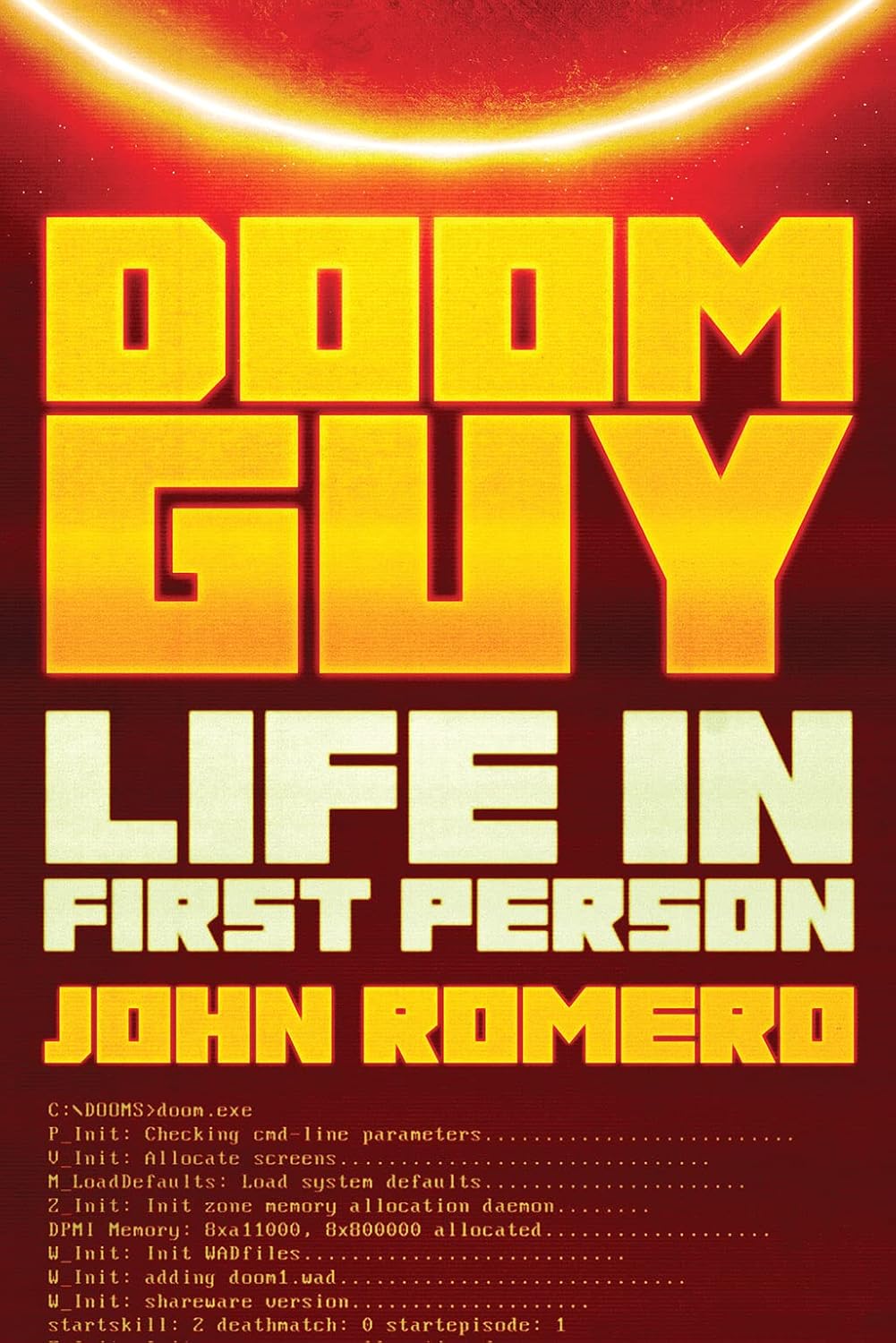
Doom Guy: Life in First Person (Abrams & Chronicle Books)
A Genuinely New Look Into Romero’s Time After Making Daikatana
All understandable similarities with Masters of Doom aside, Doom Guy is not without its unique selling points. I still recommend the read a lot for one particular reason. Let me highlight the last third of the book, themed around the time after Romero’s post-id studio Ion Storm made the much-ridiculed Daikatana. This part of Doom Guy is readable without the rest and thus (apparently deliberatly, in contrast to my critique from above) repeats some info that was laid down in the first two thirds of the book.
This partly separated third part is a great boon of the book, since a lot of interested readers will have read Masters of Doom anyway. Romero even freely references Kushner’s book, verbatim at times. Why shouldn’t he, when a lot of the quotes are his? This part of the book provides genuinely new information about Romero’s later endeavours, and especially his move to Ireland and into the European game development scene. This, incidentally, was a main part of my interview with him, so my peaked interest in that topic might be connected to my general interest of the European games ecosystem. An added note: while this review was written long before Romero Games‘ current hardships, releasing it now cannot be done in good faith without mentioning that Romero Games is facing massive layoffs after their publisher, allegedly Microsoft, cancelled the deal for their coming FPS game.
A Worthwhile Addition to Gaming Bookcases
If you are a Romero superfan, you’ll know that you’ll want to read Doom Guy anyway. If you have read Masters of Doom, grab a copy for the third part of the book at least, because the stories from Romero’s post Daikatana time are as new as they are entertaining. Otherwise, decide: Read Masters of Doom if you are out for a novelised entertainment experience or are only interested in the id times from a consumer perspective, or Doom Guy if you want more technical info about game devs of old, game business insights, and the voice of a legend telling it – just bear in mind that it is probably coloured in his own favour, as autobiographies tend to.
Doom Guy: Life in First Person released on 18 July 2023 and is available as hardcover, paperback and ebook anywhere you can get books.